Your revenue is growing and your margin is not? In some cases orders ship across Shopify, Amazon, TikTok Shop and Walmart, the top line looks healthy, and somewhere between the shelf and the doorstep the money goes back out. Most operators feel it on the P&L months before they can point at it on an invoice.
However, fulfillment costs are actually the reason, and they are harder to see than they should be. They arrive as a dozen separate line items covering storage, handling, packaging, carrier charges and surcharges, quoted in different units, on invoices that rarely add up the way the sales call implied. A per-order rate that looked competitive in a proposal turns into something else once receiving, storage, accessorials and fuel land on top of it, just as freight quotes change when you start running instant rate comparisons across shipments.
This guide breaks the cost down line by line: what every fee on a 3PL invoice actually is, how it is charged, what makes it go up, and how to calculate your fully loaded cost per order so you can compare providers on the same basis. No rate in here will match your quote exactly, and that is the point. Fulfillment pricing depends on your order profile, so the only figure that matters is your own.
Fulfillment Costs: What Do They Include?
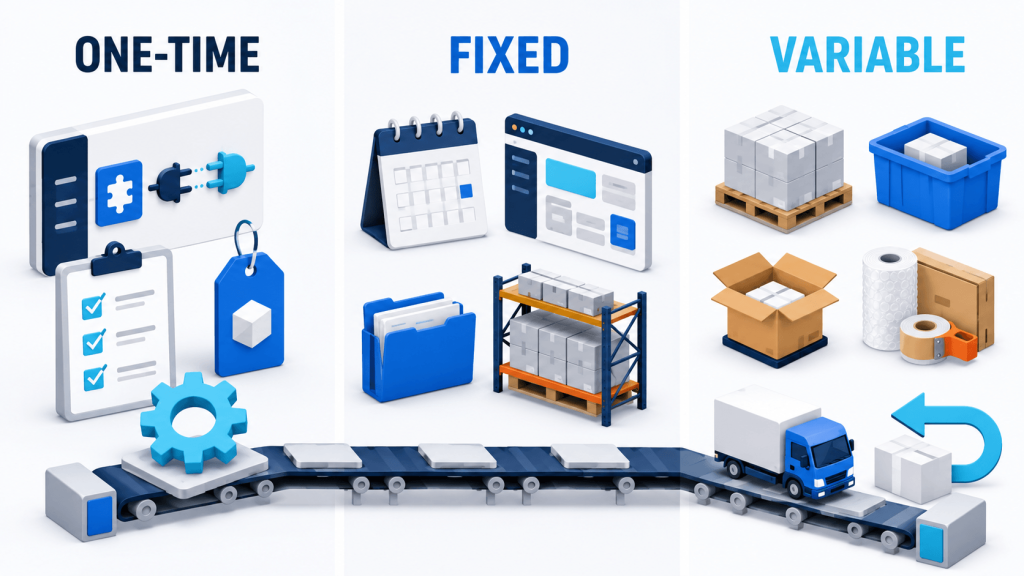
Fulfillment costs are all the expenses required to receive inventory, store it, process orders, pick and pack products, ship parcels, and handle returns. For ecommerce businesses, those expenses usually fall into three groups:
- One-time fulfillment costs: onboarding, account setup, store integrations, SKU mapping, and initial projects.
- Recurring fixed costs: monthly minimums, software charges, account management, and reserved storage space.
- Variable fulfillment costs: receiving, storage, pick and pack, packing materials, shipping, kitting, and returns processing.
Some providers show each activity as a separate fulfillment fee. Others combine several activities into one total fulfillment cost. Neither model is automatically better. What matters is whether you can connect every charge to your real order volume, product mix, and service requirements.
The same quote can produce very different ecommerce fulfillment costs for two brands. A company shipping one small item per order has different cost drivers from a brand selling bundles, oversized products, subscription kits, or fragile goods that need custom packaging.
How to Calculate Fulfillment Costs Per Order
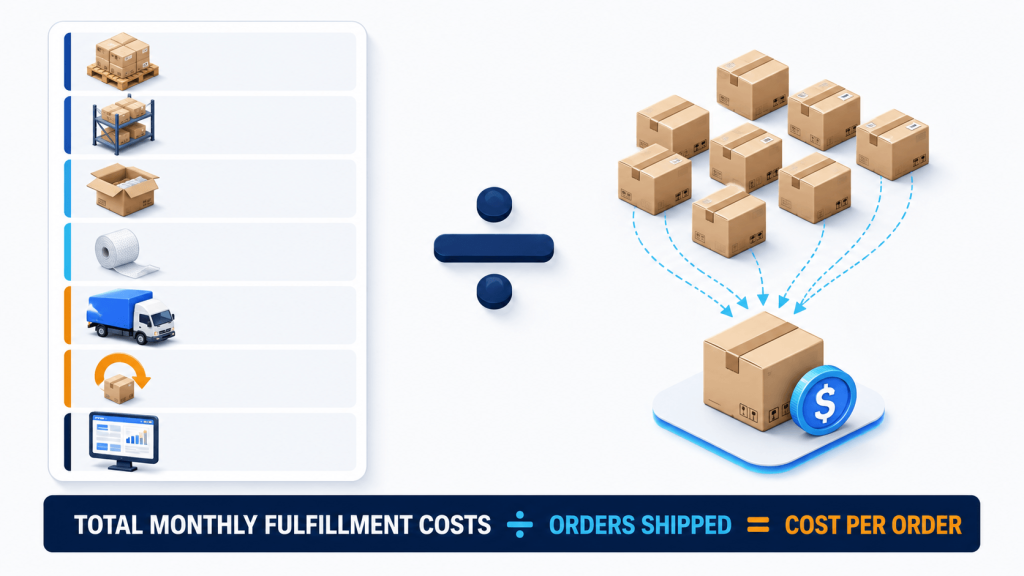
To calculate fulfillment costs accurately, add every fulfillment-related expense for the period and divide the total cost by the number of orders shipped in that same period.
Fulfillment cost per order = Total monthly fulfillment costs / Total orders shipped
Your monthly total should include:
- Receiving and put away
- Storage fees
- Pick and pack charges
- Packaging and packing materials
- Kitting or assembly
- Outbound shipping and carrier surcharges
- Returns processing
- Technology, account management, and administrative costs
- Monthly minimums and other costs
Do not divide annual set up costs by only one month of orders. Allocate those costs over the period in which you expect to benefit from them. For example, if onboarding costs $2,400 and you expect the relationship to last two years, you could allocate $100 per month before calculating the total fulfillment cost.
A Cost-Per-Order Example
Imagine an ecommerce business ships 5,000 orders in one month and receives this invoice:
| Cost category | Monthly amount | Cost per order |
| Receiving and putaway | $1,250 | $0.25 |
| Storage costs | $3,000 | $0.60 |
| Pick and pack fulfillment fee | $12,500 | $2.50 |
| Packing materials | $1,750 | $0.35 |
| Outbound shipping | $31,000 | $6.20 |
| Returns processing | $1,000 | $0.20 |
| Software and administrative costs | $750 | $0.15 |
| Total cost | $51,250 | $10.25 |
In this example, the total fulfillment cost is $51,250 and the cost per order is $10.25.
That number becomes more useful when you compare it with average order value, gross margin, net sales, return rate, and customer acquisition cost. A $10.25 cost per order may work well for a $120 basket, but it could be difficult to sustain on a $25 order.
Also calculate fulfillment costs by channel, product family, or shipping method when the averages hide meaningful differences. Your Shopify orders, marketplace orders, subscriptions, and wholesale shipments may not use the same packaging process or generate the same shipping fees.
Labor Costs: Direct Labor, Productivity, and Automation
Labor costs influence nearly every warehouse activity, even when they are not shown as a separate line item. Receiving, counting, put away, picking, packing, cycle counting, quality control, and returns all require labor hours.
In an in-house operation, direct labor includes the wages and benefits of employees who physically receive, pick, pack, and ship orders. Supervisors, scheduling teams, customer support, and payroll may create additional administrative costs. Overtime, seasonal hiring, workers’ compensation, training, and turnover can push labor costs higher than the hourly wage suggests.
With a 3PL, labor costs may be included in the fulfillment fee or charged by activity. That is one reason you should ask what a pick-and-pack price covers. Does it include the first item only? Is direct labor for inserts, labeling, or quality checks billed separately? Are special projects charged per unit or per labor hour?
Automation can reduce labor costs, but technology does not eliminate the need for people. A strong warehouse management system should reduce walking, manual entry, and preventable errors so labor hours generate more completed orders. The goal is not simply to use less labor. It is to improve output and accuracy without allowing fulfillment costs to rise faster than order volume.
Ecommerce Fulfillment Costs by Fee Type
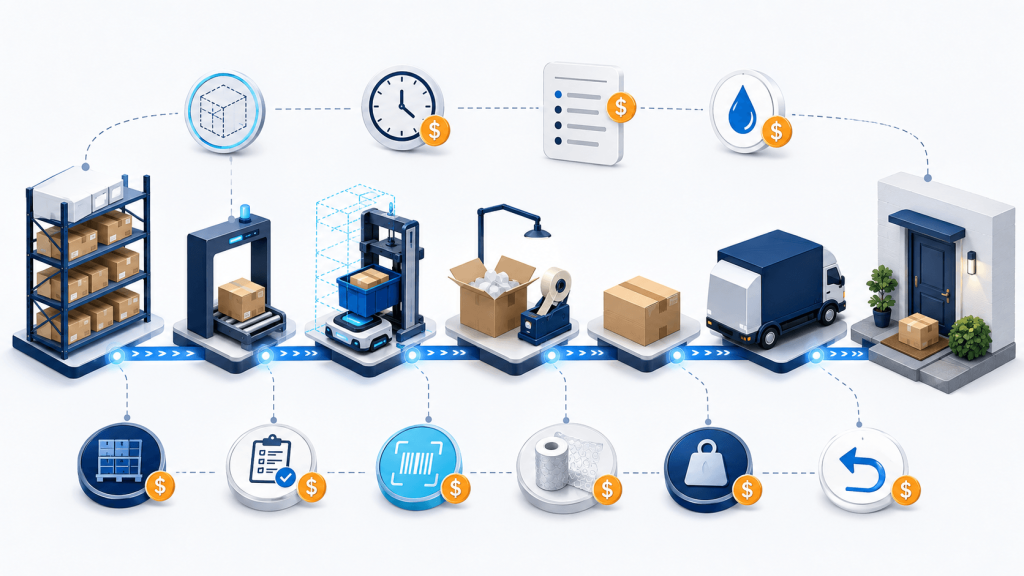
Most ecommerce fulfillment costs come from the same set of warehouse activities. The names and billing units may change between providers, so compare what each fulfillment fee includes before comparing the price.
Receiving and Set Up Costs
Before a fulfillment center can ship your orders, it must receive and prepare your inventory. Receiving may be charged per hour, pallet, carton, container, unit, or inbound shipment.
Ask whether the rate includes unloading, counting, inspection, SKU verification, labeling, palletizing, and putaway. If the inbound shipment does not match the advance shipping notice, the provider may incur costs for manual reconciliation and pass those costs to you.
Set up costs can include platform integration, account configuration, EDI or API work, SKU mapping, shipping-rule configuration, and staff training. These set up costs are usually small compared with long-term fulfillment expenses, but unclear implementation requirements can create unexpected charges at contract inception.
Storage Fees and Storage Costs
Storage fees pay for the warehouse space your inventory occupies. A 3PL may charge by pallet, bin, shelf, cubic foot, or unit. Some providers calculate storage costs using a daily average, while others bill according to the space used on a specific date.
Seasonality matters. Storage fees often increase when slow-moving stock stays in the facility, inventory arrives too early, or a brand keeps more safety stock than its sales justify. Long-term or aged-inventory charges can make the storage space used by one slow SKU considerably more expensive than the same space used by fast-moving inventory.
To understand these costs, ask:
- What is the billing unit and measurement date?
- Are there different rates for bins, shelves, pallets, or oversized goods?
- Do peak-season or long-term storage fees apply?
- Is there a minimum amount of storage space?
- How are partially used pallets or bins billed?
Good inventory management reduces storage costs by improving demand planning, replenishment timing, and sell-through. It also keeps warehouse space available for the products that actually generate sales.
Pick and Pack Fulfillment Fee
The pick and pack fulfillment fee covers the work required to retrieve products, verify the order, pack it, and prepare it for the carrier. Some 3PLs include one item in the base fulfillment fee and charge for each additional pick. Others price by order, unit, case, or task.
A low fulfillment fee can become expensive when the average order contains several items. If the first pick costs $2.20 and each additional item costs $0.45, a four-item order creates a $3.55 pick-and-pack charge before packaging or shipping.
Confirm whether the fulfillment fee includes scanning, quality control, standard packaging, inserts, label printing, and order processing. You should also ask how the provider treats split shipments. If inventory is spread across facilities, one customer order may generate two fulfillment fee charges and two shipping fees.
Packaging and Material Costs
Standard boxes, mailers, tape, labels, void fill, and protective materials may be included in the fulfillment fee or billed separately. The right packaging process protects the product while controlling dimensional weight.
Custom packaging can improve the unboxing experience, but it adds material costs and often creates extra warehouse touches. Branded boxes, tissue paper, gift notes, samples, and inserts may require special storage, assembly, or quality checks.
Ask the provider to distinguish direct materials used in each shipment from reusable supplies and other resources. Also find out how it manages wasted materials. An oversized box does more than use extra cardboard: it can increase shipping fees because carriers may bill the parcel by dimensional weight.
Outbound Shipping and Shipping Fees
For many ecommerce businesses, outbound shipping is the largest part of fulfillment costs. Shipping fees depend on origin, destination, service level, package weight, dimensions, residential delivery, fuel, and carrier surcharges.
Do not compare only the advertised carrier discount. Compare the actual shipping fees your order profile would generate after accessorial charges. A provider with warehouses closer to your customers may reduce costs by lowering the average shipping zone, even if another provider advertises a larger percentage discount.
Ask whether the 3PL passes through carrier rates, adds a markup, or uses a blended rate. You should also understand address-correction fees, delivery-area surcharges, peak fees, signature charges, and the rules for carrier claims.
Returns Processing
Returns processing may include receiving the parcel, inspecting the product, photographing damage, updating inventory, restocking, refurbishing, quarantining, or disposing of the item. Each outcome can have a different fulfillment fee.
Calculate returns processing as part of your normal cost per order, not as an occasional exception. If 5% of shipped orders are returned and the average return costs $8 to process, returns add $0.40 to the average fulfillment cost of every outbound order.
A clear disposition workflow can reduce costs and shorten the time between a return arriving and saleable inventory becoming available again.
Kitting, Custom Packaging, and Other Costs
Kitting combines multiple SKUs into a new sellable unit or prepares products for a promotion, subscription, or marketplace requirement. These services may be billed per project, completed kit, unit touched, or labor hour.
Other costs can include serial-number capture, lot tracking, expiration-date control, bagging, bundling, labeling, product inspection, photography, disposal, B2B routing guides, and retailer compliance work. Ask for custom pricing when the work does not fit a standard fulfillment process.
Costs Incurred Beyond the Rate Card
The visible rates are only part of the invoice. Costs incurred outside normal order processing can include account minimums, peak surcharges, noncompliance fees, special projects, and contract management.
These costs incurred are not always unreasonable. A 3PL may incur costs when your team sends inventory without labels, changes an order after release, requests same-day project work, or uses existing systems in a way that requires manual intervention. The problem is not that such costs exist. The problem is discovering them after the work is complete.
Before signing, ask the provider to specifically identify every situation that can generate nonstandard costs. Review the existing contract language for automatic rate increases, minimums, renewal terms, and charges tied to long term supply arrangements or committed capacity.
If you are evaluating an anticipated contract, model both normal operations and exception-heavy months. Costs incurred during a launch, promotion, or peak season can materially change the estimated total costs for the year.
Administrative Costs and Monthly Minimums
Administrative costs may include account management, software access, reporting, EDI support, billing, or customer service. A monthly minimum guarantees that the provider receives a baseline amount even when your order volume is low.
These charges can be reasonable when they support real services, but they should be visible in the total cost calculation. If your monthly minimum is $2,000 and activity-based fulfillment expenses total only $1,500, the effective monthly cost is still $2,000.
Ask what happens when your volume drops, how account management is defined, and whether administrative costs increase as you add channels, users, locations, or integrations.
How Fulfillment Costs Impact Profit Margins
Fulfillment costs impact more than the logistics budget. They affect product pricing, promotional flexibility, contribution margin, cash flow, and the amount you can spend to acquire a customer.
The most useful way to see how fulfillment costs impact profit margins is to build a per-order contribution model:
Net sales – product cost – payment fees – fulfillment costs – shipping subsidy – returns allowance – acquisition cost = contribution margin
If your average order produces $18 in contribution margin and fulfillment costs rise by $2, your contribution margin falls to $16. That is an 11.1% reduction even though the fulfillment invoice increased by only $2.
This is also why pricing strategies should use the total fulfillment cost instead of only the fulfillment fee. Free-shipping thresholds, bundles, subscriptions, and product promotions can improve average order value, but only when the extra units do not create more fulfillment expenses than the offer can absorb.
Fulfillment Expenses: In-House vs. Outsourcing Fulfillment
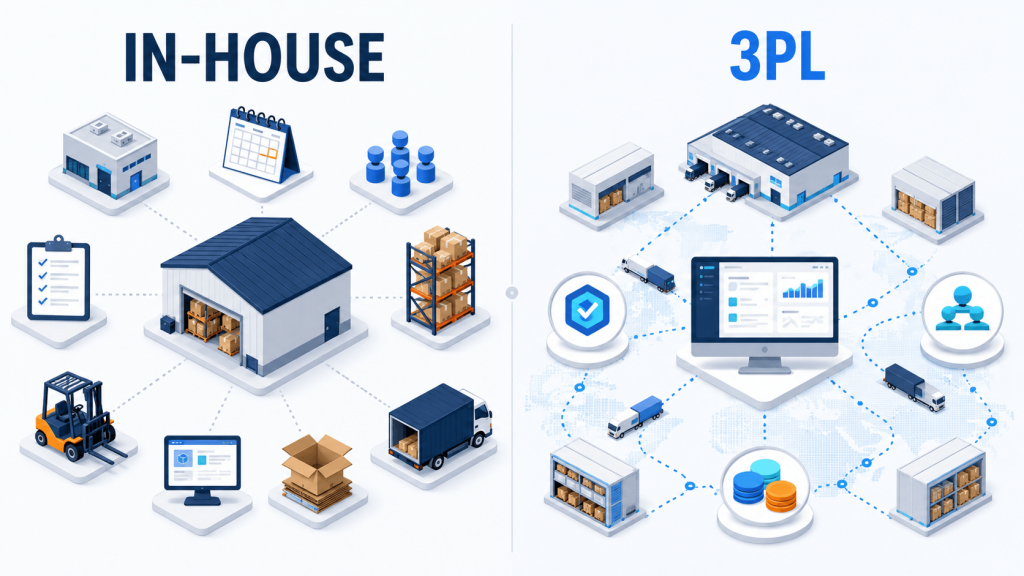
In-house fulfillment can work well when order volume is manageable, the product requires unusual control, or you already have suitable space and staff. However, the overall cost includes more than rent and direct labor.
In-house fulfillment expenses may include:
- Warehouse rent, utilities, insurance, and security
- Recruiting, training, benefits, overtime, and labor costs
- Racking, forklifts, scanners, packing stations, and maintenance
- Warehouse and order-management software
- Packing materials and wasted materials
- Carrier pickup, shipping fees, and claims administration
- Management time and other resources
Outsourcing fulfillment converts many of these fixed commitments into variable costs. A third party logistics provider can also offer established systems, trained teams, warehouse capacity, and volume discounts that would be difficult to build alone.
The right comparison is not warehouse payroll versus a 3PL fulfillment fee. Compare the total fulfillment cost of both operating models at your current volume, peak volume, and a realistic growth scenario. Include the capital and management time that in-house operations require.
Costs to Fulfill Orders: The Main Cost Drivers
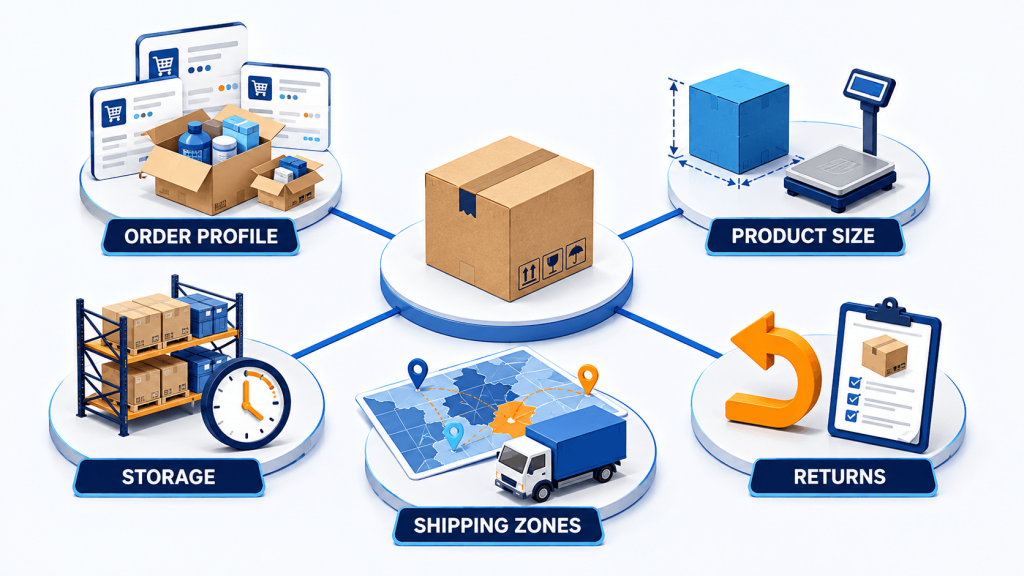
The costs to fulfill orders change as your operation becomes more complex. The biggest cost drivers usually include:
- Order volume: Higher volume may unlock volume discounts, but sharp peaks can require more labor hours and capacity.
- Items per order: More picks increase the fulfillment fee and packing time.
- Product dimensions and weight: Larger products use more storage space and can raise outbound shipping costs.
- SKU count: SKU proliferation can increase storage locations, replenishment work, and picking distance.
- Inventory age: Slow-moving inventory creates continuing costs without generating net sales.
- Packaging requirements: Custom packaging and fragile products add direct materials, handling, and quality checks.
- Customer geography: Long shipping distances and high average zones increase shipping fees.
- Return rate: More returns increase processing, inspection, and write-off costs.
- Channel requirements: Amazon, retail, wholesale, and DTC orders may need different labels, documents, packaging, and service levels.
To reduce the costs to fulfill each order, start with the two or three cost drivers that create the largest dollar impact. Changing ten small items will not matter if outbound shipping and inefficient storage account for most fulfillment costs.
Inventory Management Can Lower Storage and Shipping Costs
Inventory management connects demand planning with the physical fulfillment process. Accurate inventory data helps you decide how much to reorder, when to replenish, and where to place stock.
Poor inventory management raises fulfillment costs in several ways. Too much stock creates storage fees and ties up cash. Too little stock creates split shipments, emergency transfers, and lost sales. Inventory in the wrong fulfillment center may travel through more shipping zones than necessary.
A connected warehouse management system can help you monitor inventory levels, order velocity, storage utilization, and replenishment needs across locations. These insights support a better fulfillment strategy because you can position fast-moving products near demand while avoiding unnecessary duplication of slow sellers.
Performance Obligations and Contract Costs: An Accounting Note
In logistics, the phrase fulfillment costs usually means operational expenses. In accounting guidance, costs to fulfill a contract and performance obligations have a more specific meaning. The two topics should not be mixed without context.
How Performance Obligations Are Identified and Satisfied
A performance obligation is a promise to transfer a distinct good or service to a customer. Depending on the specific contract, a reporting entity may identify receiving, storage, fulfillment services, transportation, or other promised services as separate performance obligations, or conclude that a combined service represents a single performance obligation.
At contract inception, the reporting entity identifies the promised services and determines the transaction price, including any variable consideration. It then allocates that transaction price to the performance obligations and recognizes revenue as the satisfied performance obligations are completed.
Some contracts include partially satisfied performance obligations at the reporting date. Others include unsatisfied performance obligations or future performance obligations that will be completed in a later period. The analysis depends on what the customer has been promised, when control transfers, and whether future performance represents a distinct service.
A contract can therefore include satisfied performance obligations, partially satisfied performance obligations, and remaining performance obligations at the same reporting date. The reporting entity must distinguish those categories from unsatisfied performance obligations so revenue is not recognized before the promised services are transferred.
Which Costs to Fulfill a Contract May Qualify
Contract costs require a separate assessment. Certain costs incurred to fulfill a specific contract may be recognized as an asset when the applicable accounting criteria are met. In broad terms, such costs must relate directly to a specific contract or anticipated contract, generate or enhance resources that will be used to satisfy future performance obligations, and be expected to be recovered. In other words, the analysis asks whether the costs generate or enhance resources for future performance rather than simply documenting costs incurred in a prior period.
Direct labor, direct materials, allocations of costs relating directly to contract activities, and some contract management costs may qualify depending on the facts. General administrative costs, wasted materials, and costs relating to past performance are generally treated differently because they do not support future performance obligations in the same way. Such costs should not be grouped together only because they were all incurred during the contract period.
For example, set up costs do not automatically transfer promised services directly to the customer. If setup activities do not transfer a good or service, they may not be performance obligations even though the provider must incur costs to begin the work. Satisfied performance obligations are based on the transfer of promised value, not simply the timing of the costs incurred.
This accounting discussion is not a substitute for advice from a qualified accountant. Ecommerce businesses comparing 3PL invoices can focus on operational fulfillment costs; a reporting entity preparing financial statements should apply the relevant accounting framework to its existing contract and specific facts.
Past Performance: How to Evaluate a 3PL
A pricing spreadsheet tells you what a provider plans to charge. Past performance helps you judge what the relationship may actually cost. Before comparing provider quotes, calculate your total 3pl cost per order so every proposal is measured against the same baseline.
Ask for service data that matches your operation: order accuracy, same-day shipping cutoffs, inventory accuracy, receiving time, claims response, and returns processing time. Then ask how the provider handles a missed service level and whether reporting is available through its existing systems.
Look beyond average performance. A fulfillment center may perform well during normal months but struggle during launches or peak season. Ask for examples of similar ecommerce businesses, comparable order volume, and the steps taken when volume exceeded the forecast.
Operational errors create costs even when they never appear as a fulfillment fee. A wrong item can generate replacement shipping, returns processing, support time, and a lost customer. That is why reliable past performance belongs in your cost comparison.
Fulfillment Center Quote Checklist
Before selecting a fulfillment center or distribution center, normalize every quote using the same monthly assumptions. Give each provider the same SKU count, product dimensions, pallets, orders, items per order, return rate, customer destinations, and channel mix.
Then confirm:
- What does the base fulfillment fee include?
- How are additional picks charged?
- How are storage fees measured and when are they billed?
- Are packing materials included?
- Is custom packaging charged by unit, task, or labor hour?
- Are carrier rates passed through or marked up?
- What set up costs, minimums, software fees, and administrative costs apply?
- How are receiving exceptions and special projects priced?
- What volume discounts apply, and are they automatic?
- How are returns processing, disposal, and refurbishment charged?
- Can the 3PL provide billing data by order, SKU, channel, and fulfillment center?
- What contract terms control annual increases, renewal, and termination?
Custom pricing should make the quote more relevant to your operation, not make the invoice harder to audit. Ask the provider to show how its assumptions connect to your total fulfillment cost.
How to Reduce Fulfillment Costs Without Slowing Delivery
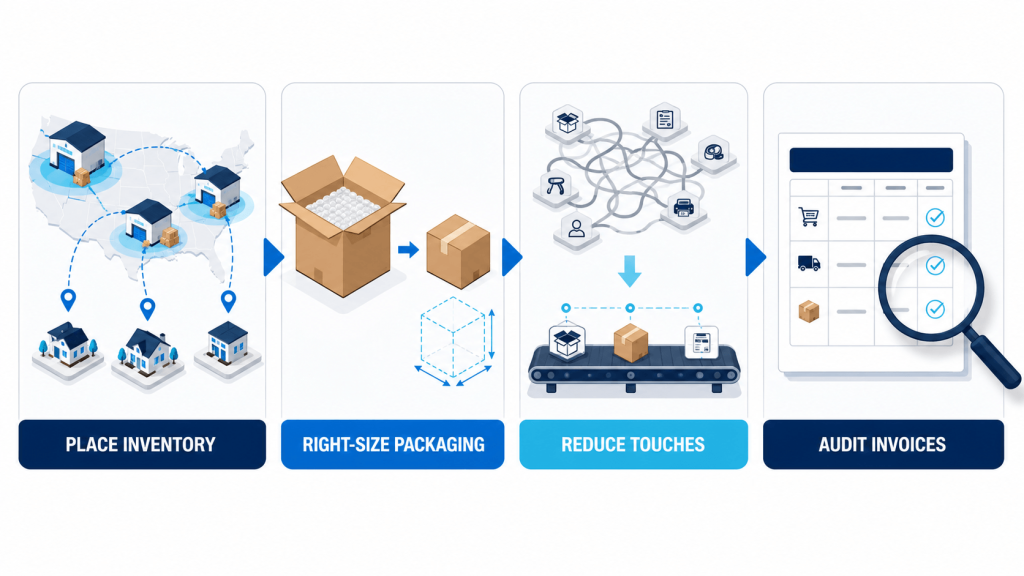
Reducing fulfillment costs does not have to mean using cheaper packaging, understaffing the warehouse, or accepting slower shipping. The best savings usually remove waste from the fulfillment process.
Start with these actions:
- Distribute inventory using order data. Place the right inventory closer to customers to lower zones and outbound shipping costs.
- Improve carton selection. Right-sized packaging can reduce material costs and dimensional weight.
- Set inventory aging rules. Discount, bundle, transfer, or liquidate slow stock before storage compound.
- Reduce avoidable touches. Clear labeling, accurate inbound documentation, and standard packaging instructions reduce manual work.
- Review SKU profitability. Some products generate net sales but lose money after storage fees, fulfillment expenses, and returns.
- Use volume discounts carefully. Confirm that the discount applies to the activities that drive your total cost.
- Audit invoices against order data. Billing at the order level helps you find duplicate charges, unexpected fulfillment fee changes, and incorrect dimensions.
- Track cost per order every month. A monthly trend reveals whether fulfillment costs rise because of rates, product mix, shipping zones, or operational exceptions.
The goal is to reduce costs while protecting accuracy and delivery speed. A fulfillment strategy that saves $0.30 on handling but adds $1.00 in reshipments is not an improvement.
How Forceget Approaches Fulfillment Costs
Forceget connects ecommerce fulfillment, warehousing, inventory management, and transportation in one supply chain operation. That gives ecommerce businesses clearer visibility from inbound receiving through outbound shipping instead of forcing them to coordinate separate providers and disconnected systems.
Our team reviews your products, order volume, channel mix, storage needs, packaging process, and customer locations before building custom pricing. The objective is to show the total fulfillment cost behind the quote, identify the cost drivers that matter most to your business, and make the wider supply chain easier to manage.
For further discussion about your current rate structure, bring a recent 3PL invoice and a representative month of order data to the review.
If you want to compare your current fulfillment expenses with a connected 3PL model, contact Forceget for a fulfillment review.
Frequently Asked Questions About Fulfillment Costs
What is included in fulfillment costs?
Fulfillment costs can include receiving, putaway, storage fees, pick and pack, packing materials, custom packaging, kitting, outbound shipping, returns processing, technology, account management, and administrative costs. Review the provider’s definition because one fulfillment fee may combine several services.
How do I calculate fulfillment costs per order?
Add all fulfillment expenses for the month, including allocated set up costs and minimums, and divide the total cost by the number of orders shipped. For a more detailed view, calculate fulfillment costs by channel, product group, or shipping method.
What is a typical fulfillment fee?
There is no universal fulfillment fee. Pricing depends on order volume, items per order, product size and weight, packaging, storage space, shipping destination, return rate, and service requirements. Compare the total fulfillment cost using your own operating data.
Are shipping fees included in 3PL fulfillment costs?
Sometimes. Some providers combine picking, packaging, and shipping into one fulfillment fee, while others show outbound shipping separately. Ask whether carrier charges are passed through, marked up, or blended.
How do storage costs affect cost per order?
These costs are divided across the orders shipped during the period. When inventory grows faster than order volume, the storage portion of cost per order increases. Slow-moving products can therefore raise overall fulfillment costs even when pick-and-pack rates stay the same.
When does outsourcing fulfillment reduce costs?
Outsourcing fulfillment can reduce costs when a 3PL’s warehouse network, labor model, systems, and carrier rates cost less than maintaining the same capacity in-house. Compare the complete operating cost, including management time, technology, space, equipment, labor costs, and peak capacity.