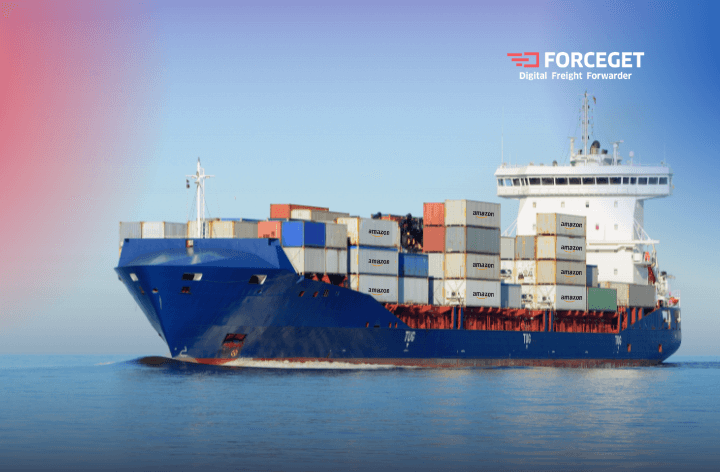
Amazon ocean freight moves seller cargo by sea into Amazon’s fulfillment network. Amazon sellers can use Amazon Global Logistics, Amazon’s cross-border program, or arrange inbound shipments through an independent freight forwarder.
The right choice depends on your supplier, shipment size, destination, and replenishment deadline. Compare the complete journey, including clearance and delivery, rather than choosing the lowest sailing rate.
What Is Amazon Ocean Freight?
Amazon ocean freight describes ocean shipping for Amazon replenishment. It is separate from the selling subscription and does not mean Amazon owns the vessel carrying your products.
Amazon Global Logistics offers door-to-door ocean and air freight services. Its published coverage includes China-to-US, UK, EU, and Japan routes, plus Vietnam-to-US ocean service. Confirm the exact lane and receiving program before booking. Amazon Global Logistics.
An integrated arrangement can simplify your supply chain, but your business still needs accurate product information, shipment preparation, and realistic factory deadlines.
Can You Ship From China Directly to Amazon Fulfillment Centers?
Eligible sellers can ship from China directly into supported Amazon facilities. However, “direct” does not mean cargo avoids ports, customs checks, handling facilities, or distribution transfers.
Before you ship directly, confirm the origin pickup address, destination, and services included. Ask whether the provider will deliver directly to Amazon fulfillment centers or first move goods through intermediate warehouses.
For inland suppliers, a port-origin quote excludes part of the journey. Compare equivalent starting points when assessing Amazon Global Logistics against other providers.
Choose Your Amazon Ocean Freight Shipping Mode

Select a shipping mode using your replenishment window, available inventory, and the margin at risk if products arrive late.
Standard Ocean Freight
Standard Ocean freight suits planned replenishment when your schedule allows for variation. Review previous shipments from factory readiness through receiving, rather than relying only on vessel transit.
When comparing Standard Ocean services, confirm which milestones the estimate covers and whether final appointments are included.
Fast Ocean Freight
Amazon Global Logistics offers Fast Ocean services on supported lanes. Evaluate Fast Ocean freight when Standard Ocean would leave a replenishment gap but flying the complete purchase order is difficult to justify.
Ask what is expedited. A Fast Ocean booking cannot recover time lost to unfinished production, incorrect documents, or unavailable receiving capacity.
Air Freight
Amazon Global Logistics advertises air freight into its network within 7-10 days. Treat this as a published service estimate, not a universal guarantee; confirm shipment-specific timing. Amazon’s transportation options.
Air freight can bridge urgent demand while the main order travels by sea. Compare the additional spend with the margin preserved by avoiding a stockout.
Full Container Load vs. Less Than Container Load (LCL)
Container arrangement and service speed are separate decisions. Choose how much to ship before comparing available sailings.
Full Container Load (FCL)
Full container load (FCL) reserves container capacity for your shipment. It can suit consistent bulk purchasing, but unused space affects the economics because freight pricing is influenced by shipment volume as well as dimensions, weight, stackability, and handling restrictions.
Check dimensions, weight, stackability, and handling restrictions. Full container load (FCL) does not justify buying unnecessary inventory simply to fill a container.
Less Than Container Load (LCL)
Less than container load (LCL) combines shipments within shared capacity. It can suit smaller purchases or frequent replenishment without reserving an entire container.
Compare consolidation, handling, and destination charges. Where either arrangement is practical, request both options for the same cargo and receiving point.
Plan Your Next Shipment With Forceget
Contact ForcegetBook Amazon Ocean Freight Through Seller Central
Amazon Global Logistics onboarding requires a payment method, importer of record details, and required documents. Sellers can book and track shipments through Seller Central. Amazon’s onboarding instructions.
Prepare Before You Book Shipments
Confirm product eligibility, carton quantities, dimensions, gross weight, and the supplier’s ready date. Reconcile the invoice and packing list before you book freight transportation.
Identify optional services such as pickup, labeling, and palletization. Save the accepted quote and check how you will pay charges outside it.
Track the Shipping Process
Track departure, arrival, release, final appointment, and receipt separately. Label creation or a vessel arrival update does not establish that inventory is available for customers.
Use Seller Central to monitor requests. When contacting support, provide the booking reference, last completed milestone, and specific action needed. Keep a shared shipment record for your team.
Customs Clearance and Import Responsibilities
Amazon Global Logistics provides customs brokers for origin and destination clearance. These services do not eliminate duties, inspections, or the need for accurate information. Amazon’s customs clearance explanation.
For US-bound ocean shipments, discuss tariff classification, commercial invoices, and Importer Security Filing (ISF) with the appointed broker. Confirm the responsible filer and applicable deadlines before departure.
For international shipments, clarify who answers document requests and coordinates clearance and delivery after release. Customs clearance and acceptance at an Amazon fulfillment center are separate checkpoints.
Do not assume every product that fits in a container is eligible. Batteries, liquids, oversized goods, and regulated cargo may require additional review or specialized support.
What Does Amazon Ocean Freight Cost?
Amazon ocean freight pricing varies with origin, destination, shipment size, sailing date, and service requirements. Use a current quote for your actual cargo.
Compare Total Landed Costs
Landed costs combine the goods’ purchase price with expenses needed to reach a defined receiving point. Use the same boundary for every comparison.
| Component | What to confirm |
|---|---|
| Goods | Purchase price and supplier terms |
| Origin services | Pickup, export handling, documentation |
| Main carriage | Container or consolidation charges and surcharges |
| Import charges | Duties, taxes, brokerage, applicable inspections |
| Inland movement | Port handling, trucking, receiving appointments |
| Additional services | Preparation, storage, insurance, exception handling |
Divide the total by saleable units received. Reduced landed costs should reflect the complete calculation, not missing line items.
Ask Amazon Global Logistics and independent providers to quote identical assumptions. Competitive rates only mean something when services and endpoints match.
Separate Freight From Selling Fees
The US Professional selling plan is $39.99 monthly, with other selling fees applicable. That subscription does not pay for ocean freight. Amazon selling-plan pricing.
Keep import expenses separate from later storage and fulfillment charges. FBA inventory management costs can affect margin after the inbound journey ends.
Verify Promotional Pricing
As of September 11, 2026, Amazon advertises 8% off base ocean rates for eligible new FBA sellers during their first 60 days after onboarding. Terms apply. Amazon’s introductory offer.
This is not 8% off the entire import bill. For illustration, an eligible $3,000 base charge would receive a $240 reduction; other charges remain subject to their terms.
How Long Does Amazon Ocean Freight Take?
A blanket 20-45-day range is not a reliable commitment without a lane and defined milestones. Ask whether the estimate covers port-to-port transport or pickup through final receiving.
Plan for production completion, origin handling, sailing, customs clearance, inland movement, and warehouse processing. Demand forecasts should include a buffer for variation across these stages.
Arrival at an Amazon fulfillment center does not necessarily make every unit immediately available. Reconcile receiving status with saleable quantities before launching promotions.
Amazon Warehousing and Distribution vs. Direct FBA Receiving
Amazon Warehousing and Distribution provides bulk storage, replenishment to Amazon fulfillment centers, and distribution options for other channels. It performs a different role from facilities preparing individual customer orders. Amazon Warehousing and Distribution.
When to Ship Inventory Directly
A direct plan can suit prepared goods with near-term demand when you want to ship ocean cargo straight into Amazon. Confirm eligibility and placement instructions before releasing cargo from your supplier.
Sending too much creates storage pressure; sending too little can make repeated replenishment inefficient. Match the quantity with expected sales.
When Amazon Warehousing Helps
Reserve storage can support staged replenishment. Compare storage, processing, and onward movement rather than evaluating only transport to the first warehouse.
AWD uses a data-science model to monitor stock and trigger replenishment. Automation can simplify coordination, but your supply chain still needs realistic demand assumptions and production lead times. AWD replenishment explanation.
Should Amazon Sellers Use an Independent Forwarder?
Amazon Global Logistics may suit sellers who prefer integrated booking and support within their existing workflow. Independent providers may fit a supply chain requiring consolidation, preparation, reserve warehouses, or distribution across several channels.
Evaluate exception handling alongside competitive rates. Ask who resolves factory delays, missed sailings, document corrections, and receiving problems.
Before choosing, give each provider the same pickup address, packing details, destination instructions, and deadline. Request a breakdown of included charges, exclusions, quote validity, and responsibility for rescheduling. This makes it easier to distinguish a lower price from a narrower service scope and identify where your team must arrange additional work. Confirm the communication channel and escalation contact before goods leave the factory.
The benefits of either approach should appear in reduced landed costs, dependable replenishment, or less coordination work. Compare a representative shipment before committing.
Plan Your Next Shipment With Forceget
Forceget offers Amazon ocean freight services independently of Amazon Global Logistics, including coordination of factory pickup, sea transport, and final movement into Amazon’s network.
Share your origin address, carton measurements, ready date, and receiving plan. Explain whether you need to deliver directly, hold reserve stock, or prepare goods before release.
Contact Forceget to plan services around your replenishment deadline and customers’ needs.
Amazon Ocean Freight FAQs
Does Amazon have its own freight services?
Yes. Amazon offers several freight services. Amazon Global Logistics helps sellers move inventory internationally by ocean and air into supported Amazon facilities. Amazon Freight provides domestic transportation services in the U.S. Sellers should select the service that matches their shipment’s origin, destination, and transport requirements.
Is Amazon Freight the same as Amazon Global Logistics?
No. Amazon Freight offers U.S. full truckload, less-than-truckload, and intermodal transportation. Amazon Global Logistics handles international ocean and air shipments on supported routes. For an overseas shipment into Amazon’s fulfillment network, check Amazon Global Logistics eligibility or compare an independent freight forwarder.
Who hauls Amazon freight?
Amazon works with transportation providers across its network. For road freight, eligible trucking companies and owner-operators can book loads through Amazon Relay. An international ocean shipment can involve different providers for the sea crossing, port handling, and inland delivery. Confirm the carrier and coordination contact for each part of your booking.
Does Amazon own cargo ships?
An Amazon ocean freight booking does not mean your goods travel on an Amazon-owned vessel. Amazon uses ocean-carrier partnerships to transport cargo. For sellers, the practical checks are the named carrier, sailing schedule, routing, and delivery responsibilities. Ask your booking provider to confirm these shipment details before cargo leaves the supplier.
What logistics company does Amazon use?
Amazon uses its own logistics services alongside external transportation providers, so there is no single logistics company handling every shipment. Sellers importing inventory can compare Amazon Global Logistics with an independent provider such as Forceget. Compare equivalent pickup, customs coordination, and final-delivery services before choosing a provider.